
7 Unexpected Benefits of Contrast Therapy Most People Have Never Heard Of

Updated: Mar 2
What Is Contrast Therapy, Really?
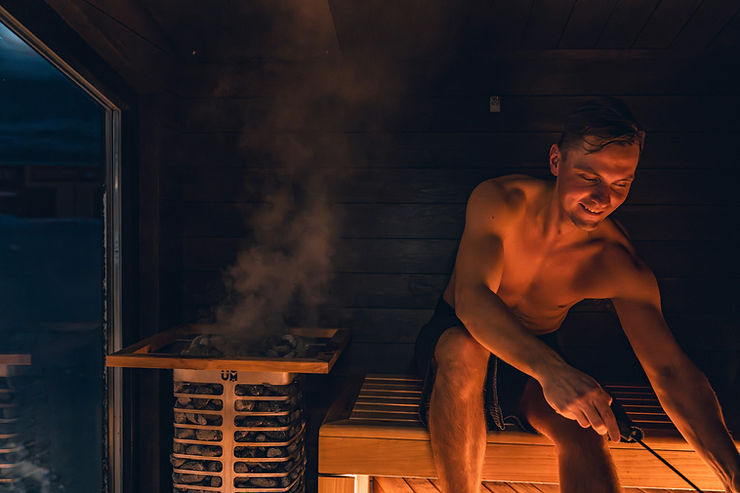
Contrast therapy is the practice of deliberately alternating between heat — like a sauna — and cold — like a cold plunge — in repeated cycles to trigger a cascade of physiological adaptations in the body.
Most people find it through sports recovery. They stay for everything else.
Because here's the thing nobody tells you at the start: The muscle soreness relief is almost the least interesting thing contrast therapy does to your body.
The rabbit hole goes much, much deeper.
We've dug through the research, talked to the community, and personally logged sessions at studios across the country (you can find one near you here) to bring you seven benefits that will genuinely surprise you.
Let's get into it.
Benefit 1: A 250% Dopamine Spike — That Lasts for Hours
When you submerge in cold water, your brain releases dopamine at levels up to 250% above baseline — and unlike the dopamine hit from a phone scroll or a sugar rush, this one is sustained for up to two to three hours after you get out.
That stat comes from research highlighted by neuroscientist Dr. Andrew Huberman, who has cited cold exposure as one of the most potent natural dopamine protocols available to humans.
The mechanism? Cold triggers the release of norepinephrine (from the locus coeruleus in the brainstem) and upregulates dopamine receptors in the brain's reward pathway.
It's not a fleeting spike. It's a long, clean, steady elevation in mood, motivation, and drive.
The heat side of contrast therapy contributes too. Sauna exposure raises beta-endorphin levels and has been shown in Finnish population studies to correlate with significantly lower rates of depression.
Put them together and you've essentially built a neurochemical "reset switch" into your week.
The bottom line: One contrast session can give you a mood and motivation boost that outlasts your morning coffee by hours — without the crash.
Want to maximize this effect at home? A full-spectrum infrared sauna like the ones from Sun Home Saunas gets your core temperature high enough to drive serious endorphin release before you ever touch the cold.
Benefit 2: Better Sleep. Like, Actually Better Sleep.
Contrast therapy improves sleep quality by triggering a rapid drop in core body temperature after the session ends — a signal the brain interprets as "time to sleep" and responds to by releasing melatonin earlier and more consistently.
Here's why this works: Your body temperature naturally drops ~2°F when it's time to sleep. Contrast therapy accelerates and amplifies this process.
The cold exposure also activates the parasympathetic nervous system (your "rest and digest" mode), which is the physiological opposite of the stress response keeping most people awake at night.
A 2021 systematic review in Sleep Medicine Reviews found that evening water immersion — even just cold — was associated with faster sleep onset and higher slow-wave (deep) sleep percentages.
Add sauna? Research from the Laukkanen Lab in Finland (led by Dr. Jari Laukkanen, the world's leading sauna researcher) found that regular sauna users report significantly better sleep quality scores than non-users.
The contrast cycle does both. Heat relaxes the muscles and dumps the cortisol. Cold locks in the recovery signal.
You get out of the session wiped out in the best possible way.
Pro tip: Schedule contrast sessions in the late afternoon, 2–4 hours before bed, for the strongest sleep benefit. Avoid doing them right before sleep — the initial adrenaline spike can delay onset for 30–60 minutes.
Benefit 3: Your Skin Will Actually Thank You
Contrast therapy improves skin health by alternating vasodilation and vasoconstriction, which acts like a circulatory pump — flushing out metabolic waste, delivering fresh oxygenated blood to skin cells, and triggering collagen-supporting heat shock proteins.
This one surprises people the most.
Most folks walk into their first contrast session thinking about their quads. They walk out noticing their skin looks… different.
Here's the biology:
Heat dilates capillaries and forces blood to the skin's surface, delivering oxygen, nutrients, and activating Heat Shock Proteins (HSPs) — molecular chaperones that repair damaged proteins and support collagen synthesis.
Cold constricts those same vessels, tightening pores, reducing puffiness, and decreasing cortisol-driven inflammation that shows up as breakouts and redness.
The cycle back and forth? That's your capillaries doing an involuntary workout.
Some practitioners in the biohacking community call this the "vascular gymnastics" effect.
For targeted skin and tissue recovery between rounds, red light therapy is the secret weapon most people aren't using yet. Lumaflex makes a flexible, FDA-cleared red light panel that you can use during rest periods in your contrast session. Red light at 630–850nm wavelengths activates cytochrome c oxidase in skin cells — essentially turbocharging mitochondrial function and collagen production at the cellular level.
Use code ContrastTherapyFinder for a discount.
Benefit 4: It Literally Trains Your Nervous System
Contrast therapy is one of the only passive recovery modalities that actively trains your autonomic nervous system — specifically, your ability to shift between sympathetic (fight-or-flight) and parasympathetic (rest-and-digest) states on demand.
Think about what happens during a session:
Sauna → sympathetic activation (heart rate up, cortisol rises, blood moves to the surface)
Cold plunge → massive sympathetic spike, followed by a deliberate parasympathetic shift as you control your breathing and calm down
Repeat
Every time you get in the cold water and breathe through the shock without panicking, you're literally doing a rep.
You're training your nervous system's ability to regulate itself under stress.
Over weeks of consistent practice, research shows this leads to:
Lower resting heart rate
Improved Heart Rate Variability (HRV) — the gold standard metric for nervous system fitness
Reduced cortisol baseline levels
Faster recovery from stressful events — physical and emotional
Dr. Rhonda Patrick describes this effect as building "stress resilience" at a fundamental physiological level.
This is why people who do contrast therapy regularly tend to feel calmer in traffic, more patient under pressure, and less rattled by the things that used to spike their anxiety.
It's not a mindset shift. It's a biological upgrade.
Benefit 5: A Gut Health Upgrade
Emerging research suggests that contrast therapy — particularly repeated cold exposure — positively influences the gut microbiome by reducing systemic inflammation, modulating stress hormones that damage gut lining, and potentially increasing microbial diversity.
This one is newer and genuinely exciting.
The gut-brain-stress axis is well-established: chronic elevated cortisol literally damages the tight junctions in your intestinal wall (a condition known as "leaky gut").
Cold exposure and contrast therapy are among the most powerful cortisol-lowering tools available outside of meditation and sleep.
A 2023 study in PLOS ONE found that cold water immersion significantly reduced inflammatory cytokines including IL-6 and TNF-α — two markers directly associated with gut barrier dysfunction and dysbiosis.
There's also preliminary evidence that cold exposure stimulates the vagus nerve, which is the primary communication highway between the brain and the gut.
A well-stimulated vagus nerve = better digestion, reduced bloating, improved gut motility.
We'll be honest: this area of research is early. But the mechanism is sound, the anecdotal reports are consistent, and the downside risk is zero.
Benefit 6: Sharper Focus and Creativity
Contrast therapy triggers a norepinephrine surge that dramatically increases focus, working memory, and pattern recognition for 2–4 hours post-session — making it one of the most practical "cognitive performance protocols" in the biohacker toolkit.
Here's what's happening in the brain:
When you hit the cold water, your brainstem floods the prefrontal cortex with norepinephrine. Norepinephrine is the neurotransmitter responsible for alertness, attention, and the ability to hold and manipulate information.
It's essentially the brain's version of hitting the focus button.
Many writers, engineers, and creatives have begun scheduling contrast sessions before deep work blocks specifically for this reason.
A session at a studio in the morning → 2–3 hours of unusually clear, high-output work immediately after.
It sounds like performance-bro pseudoscience. The neuroscience disagrees.
The heat component also contributes here: sauna use has been linked to BDNF (Brain-Derived Neurotrophic Factor)release — a protein that stimulates the growth of new neurons and synaptic connections.
BDNF is basically fertilizer for your brain.
If you're building a home setup for this purpose, a compact but powerful unit like a Sun Home Sauna paired with a precision cold plunge like Blue Cube Baths gives you the full cognitive protocol on your own schedule — no commute required.
Benefit 7: Hormesis — The "What Doesn't Kill You" Effect
Contrast therapy is one of the cleanest examples of hormesis in human biology — the scientifically validated principle that controlled, low-dose stressors make biological systems more resilient, efficient, and longer-lasting.
The word comes from the Greek hórmēsis, meaning "rapid motion" or "eagerness."
The concept: A small amount of stress (heat, cold, exercise, fasting) triggers an adaptive response that makes the system stronger than it was before — not just at the site of the stress, but systemically.
In contrast therapy, the specific hormetic adaptations include:
Mitophagy — the cellular process where dysfunctional mitochondria are identified and recycled, replaced by newer, more efficient ones
Autophagy — the broader cellular "self-cleaning" process triggered by thermal stress
Heat Shock Protein (HSP70/HSP90) upregulation — cellular repair proteins that slow aging-related protein degradation
Cold-Shock Protein (RBM3) activation — a lesser-known protein linked to neuroprotection and synaptic preservation
Dr. Rhonda Patrick has noted that the combination of heat and cold stress likely produces a synergistic hormetic response — greater than either modality alone — because the two stressors activate partially overlapping but distinct cellular defense pathways.
Translation: you're not just recovering. You're becoming harder to break.
The Full Contrast Therapy Protocol
Use this as your starting framework. Adjust intensity and duration as you adapt.
The CTF Beginner Protocol (Weeks 1–2)
Hydrate — Drink 16oz of water before starting.
Heat Phase — Enter sauna at 150–170°F. Stay for 10–12 minutes. Focus on slow nasal breathing.
Transition — Move to cold plunge within 60 seconds of exiting the sauna.
Cold Phase — Enter water at 55–60°F. Stay for 1–2 minutes. Control your breath. Don't fight the shock — breathe through it.
Rest — Exit cold. Rest 2–3 minutes at room temperature. Let your body stabilize.
Repeat — Do 2 full rounds total.
End Cold — Always finish on cold. This locks in the norepinephrine and dopamine effect.
Recovery Window — Avoid intense exercise for 60–90 minutes post-session. Let the adaptations settle.
The CTF Advanced Protocol (Weeks 4+)
Hydrate + add electrolytes pre-session.
Heat Phase — 15–20 minutes at 170–190°F.
Cold Phase — 3–5 minutes at 50–55°F.
3 full rounds.
Optional: Use Lumaflex red light panels (code: ContrastTherapyFinder) during the 2–3 minute rest window between rounds for photobiomodulation recovery amplification.
End cold. Rehydrate with 24–32oz water + electrolytes.
Note: These protocols are not medical advice. If you have cardiovascular conditions, consult your physician before starting contrast therapy.
At-Home vs. Studio: Which Should You Choose?
Both work. The right choice depends on your budget, schedule, and commitment level.
At-Home Setup
The gold standard for frequency and convenience. The limiting factor is upfront cost.
What you need:
Component | Recommended Option | Key Feature |
Cold Plunge | "River Mode" continuous flow chilling; commercial-grade durability; holds 50°F reliably | |
Infrared Sauna | Full-spectrum infrared; luxury build; fits in a spare bedroom or garage | |
Red Light Panel | Flexible + portable; FDA-cleared; use code ContrastTherapyFinder for savings |
Studio Sessions
Perfect for beginners, apartment dwellers, or those who want professional-grade equipment without the investment.
Use the CTF Studio Finder to locate contrast therapy studios near you — including verified cold plunge + sauna facilities, pricing, and reviews.
Quick-Reference: 7 Unexpected Benefits at a Glance
Benefit | Primary Mechanism | Key Biomarker | Onset |
Dopamine Surge | Norepinephrine + dopamine receptor upregulation | Dopamine baseline +250% | Within minutes of cold exposure |
Deeper Sleep | Core temp drop + parasympathetic activation | Melatonin onset; slow-wave sleep % | Same night |
Skin Improvement | Vascular pumping + Heat Shock Proteins | HSP70 levels; capillary density | Weeks of consistent use |
Nervous System Training | Repeated sympathetic/parasympathetic cycling | HRV improvement | 4–6 weeks |
Gut Health | Cortisol reduction + vagus nerve stimulation | IL-6, TNF-α; microbiome diversity | Weeks to months |
Cognitive Focus | Norepinephrine flood to prefrontal cortex | BDNF levels; norepinephrine | Within 15–30 min post-session |
Hormesis / Longevity | Mitophagy, autophagy, HSP/RBM3 activation | Mitochondrial efficiency markers | Months of consistent use |
Final Thoughts + How to Get Started
Contrast therapy is one of the most well-researched, surprisingly broad wellness practices available right now — and most people are only using it for one of its seven proven benefits.
The dopamine. The sleep. The nervous system training. The skin. The gut. The focus. The cellular longevity effects.
Any one of them would justify making contrast therapy a weekly habit. All seven together make it one of the highest-ROI health practices you can adopt.
Your next step is simple:
→ Option 1: Find a contrast therapy studio near you and book your first session this week.
→ Option 2: Start building your home setup:
Cold plunge: Blue Cube Baths
Sauna: Sun Home Saunas
Red light recovery: Lumaflex (code: ContrastTherapyFinder)
Either way — start. The benefits above don't come from reading about contrast therapy.
They come from doing it.
Found this useful? Share it with someone who only knows contrast therapy as "the ice bath thing." They're about to have their mind blown.


Comments